Hardware cloth under raised beds: mesh size, wire gauge and installation for gophers, voles and moles
To keep burrowing animals out of a raised bed, line the bottom with galvanized or stainless hardware cloth before filling and bring it up the inside of the sides. University of California IPM guidance accepts hardware cloth or 3/4-inch poultry wire for pocket gophers, but voles and moles call for mesh of 1/4 inch or smaller, so 1/4-inch hardware cloth covers all three.
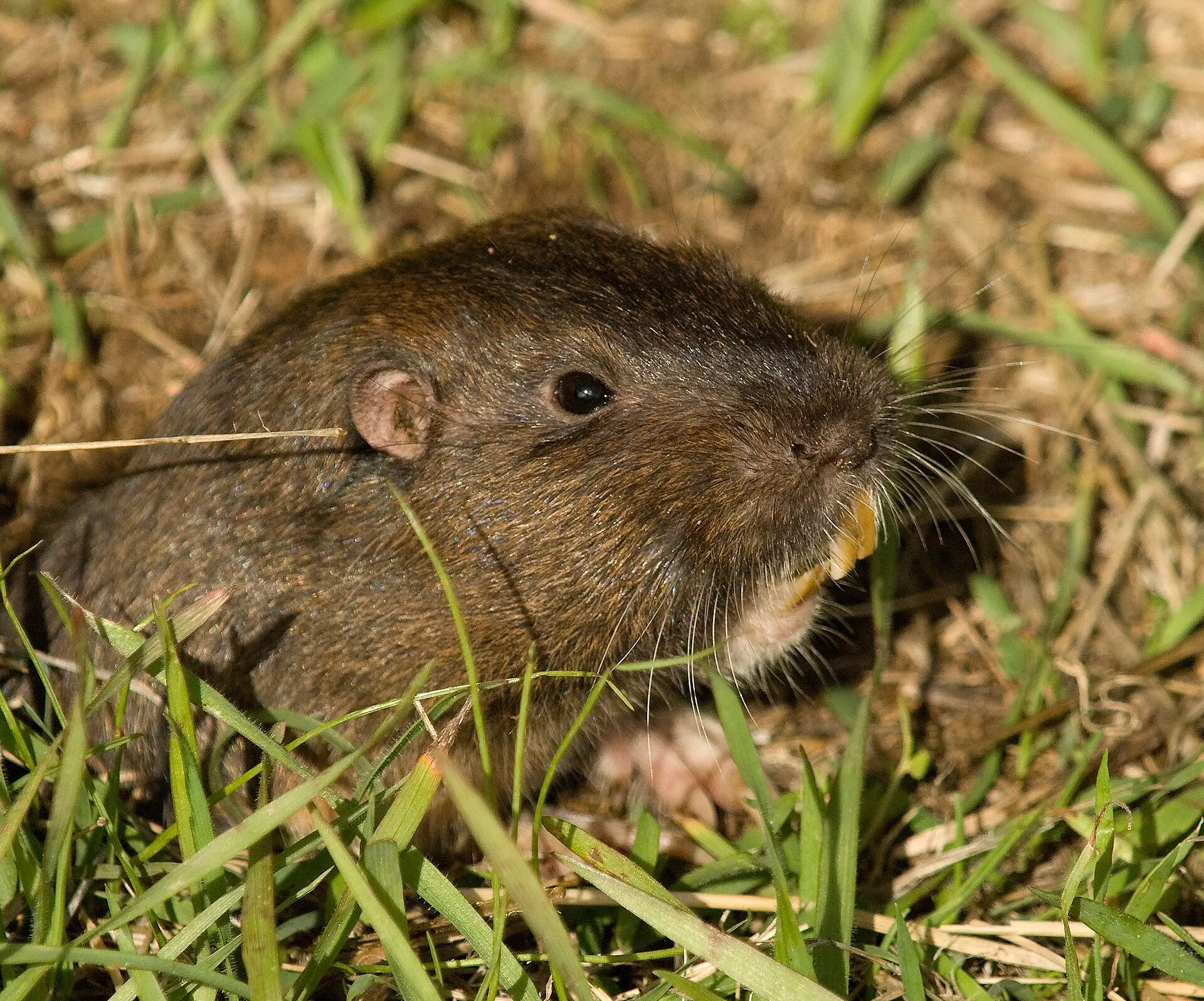

Key points
- UC IPM: lay hardware cloth or 3/4-in mesh poultry wire under raised beds before planting to exclude pocket gophers.
- Vole barriers need mesh of 1/4 in or smaller (UC IPM), and UC IPM also uses 1/4-in mesh for moles; a wire mesh bottom 'will totally exclude moles' from a raised bed.
- ASTM A740 defines hardware cloth as woven or welded galvanized steel wire fabric that serves as a protective screen against rodents; wire diameters are measured after galvanizing.
- No source we found recommends a specific wire gauge for garden beds; a heavier gauge (lower number) means thicker wire, for example 19 gauge is 0.041 in (1.04 mm) and 23 gauge 0.026 in (0.66 mm).
- Galvanized coatings corrode faster in wet soils and in soils rich in chlorides; near-neutral pH is the most hospitable (American Galvanizers Association).
Which animal you are dealing with decides the mesh
A wire floor under a raised bed is the standard way to keep burrowing animals out, but the right mesh depends on the animal. The University of California Statewide IPM Program publishes separate Pest Notes for pocket gophers, voles and moles, and their recommendations differ mainly in mesh size.
| Animal | What it does in a bed | UC IPM mesh guidance | Source |
|---|---|---|---|
| Pocket gopher | Eats roots from below and can pull whole plants into its tunnel | Hardware cloth or 3/4-in (19 mm) poultry wire under raised beds; 1/2 to 3/4 in for fences | Pest Notes 7433 (2025) |
| Vole (meadow mouse) | Gnaws plants; surface runways hidden in grass | Mesh 1/4 in (6 mm) or smaller | Pest Notes 7439 (2023) |
| Mole | Tunnels and heaves soil; mainly eats earthworms and insects | 1/4-in wire mesh; mesh bottoms “totally exclude moles” | Pest Notes 74115 (2024) |
The practical rule follows from the table: 1/4-in hardware cloth stops all three, while 1/2-in or 3/4-in mesh is only enough where gophers are the problem. UC IPM’s moles note adds a useful point for diagnosis: moles mainly eat earthworms and insects and only infrequently eat roots or bulbs, and most chewing damage blamed on moles is done by gophers, voles or deer mice. Moles harm plants indirectly, by tunnelling.
Why gophers make the bottom of a bed the critical surface
Pocket gophers attack from below, which is why the floor of a bed matters more than its walls. UC IPM’s gopher note describes feeding burrows usually 6 to 12 in (15 to 30 cm) below the surface, with nest and food chambers as deep as 6 ft (1.8 m). Gophers feed on roots and can pull an entire plant down into the tunnel from below. The note states simply: “Lay hardware cloth or 3/4-inch-mesh poultry wire under raised beds before planting,” and, for small areas, recommends complete underground screening of the sides and bottom.
For fences rather than bed floors, the same note gives a bigger specification: hardware cloth or 1/2 to 3/4-in mesh buried at least 2 ft deep with an extra 6 in bent at 90 degrees away from the planting, and at least 1 ft above ground. It also warns that persistent gophers can burrow below a fence and that wire can damage tree roots. A bed floor avoids the depth problem because the mesh is continuous under the whole bed.
Voles and moles: smaller mesh, and attention above ground
Voles and moles need finer mesh than gophers, and voles do not only come from below. UC IPM’s vole note specifies fences or aluminium flashing at least 12 in high with mesh of 1/4 in or smaller, the bottom edge buried 6 to 10 in deep, and a weed-free strip outside the fence. Voles travel in surface runways hidden under grass and use burrow openings about 1-1/2 to 2 in (38 to 51 mm) across, so cutting grass back around the bed matters as much as the floor.
For moles, UC IPM describes a barrier of hardware cloth or 1/4-in wire mesh in a trench at least 2 ft deep with a 6-in lip bent outward at 90 degrees and about 6 in above ground, and mentions “wire mesh bottoms in raised beds, which will totally exclude moles.” It recommends galvanized or stainless steel wire for these barriers.
What hardware cloth is, and how gauge works
Hardware cloth is a defined product, not just any wire mesh. ASTM A740-21 covers hardware cloth as “woven or welded galvanized steel wire fabric” that “serves as a protective screen against rodents”. The fabric is woven or welded and then galvanized by the hot-dip process, mesh size is determined by counting the meshes per linear foot, and wire diameters are the finished sizes after galvanizing.
Wire thickness is usually sold by gauge, where a higher number means thinner wire. The table gives the steel wire (Washburn and Moen) gauge values published in the wire gauge chart of wire cloth maker Screen Technology Group (wovenwire.com).
| Gauge | Diameter, in | Diameter, mm |
|---|---|---|
| 14 | 0.0800 | 2.03 |
| 16 | 0.0625 | 1.59 |
| 17 | 0.0540 | 1.37 |
| 18 | 0.0475 | 1.21 |
| 19 | 0.0410 | 1.04 |
| 23 | 0.0258 | 0.66 |
| 27 | 0.0173 | 0.44 |
None of the extension or standards sources we opened recommends a specific gauge for raised bed floors. What the sources do support is the logic: thicker wire has more steel and, at the same coating, more zinc to lose before the steel is exposed. Compare products by wire diameter, coating and mesh size rather than by marketing names.
Galvanized or stainless: what controls corrosion in soil
Buried mesh corrodes at a rate set by the soil, which is why the same roll can last very differently in two gardens. The American Galvanizers Association explains that chlorides are the most corrosive ions found in soil, that wetter soils are more corrosive to galvanized steel, and that soils near neutral pH are the most hospitable. It defines service life as the time to consume the zinc coating fully, plus 25%, and its article does not give a single number of years.
| Option | What the sources say | Best suited to |
|---|---|---|
| Galvanized hardware cloth (ASTM A740) | Galvanized after weaving or welding; UC IPM recommends galvanized or stainless | Most garden soils near neutral pH |
| Stainless steel mesh | UC IPM lists it as the alternative for longer life | Wet, salty or acidic soils; long-lived beds |
| Light non-galvanized wire | UC IPM uses it deliberately for plant baskets that rust away after several years | Temporary root baskets, not bed floors |
| Plastic netting | Not mentioned in the UC IPM bed-floor guidance | Not assessed here: no source found |
If the bed frame is built from copper-treated lumber, keep the mesh and its fasteners compatible with the wood; the guide to screws for raised beds explains stainless and galvanized choices.
Installing a hardware cloth floor, step by step
The installation is easiest before the bed is filled, with the frame already square and level. These steps follow the UC IPM principle of complete screening of the bottom and sides.
- Build and place the frame on level ground, as in the 4x8 build guide.
- Measure the mesh. For a 4x8 ft bed, the floor is 32 sq ft (about 3 m2). Adding 6 in up each side makes a sheet of about 5 x 9 ft, 45 sq ft (4.2 m2). If your roll is narrower, use overlapping strips and fasten the overlap.
- Lay the mesh inside the frame and press it into the corners, folding the excess up the inside of the boards rather than cutting it, so there is no gap at the junction of floor and wall.
- Fasten it to the inside of the boards with exterior staples or screws and washers, above the bottom edge.
- Check the edges where the frame meets uneven ground: any gap under the bottom board is an entrance.
- Fill the bed. A layer of soil protects the mesh from tools. If you also use a liner, see should you line a raised bed for drainage trade-offs.
A bed placed on a concrete slab needs no mesh floor at all, since nothing can tunnel up through the slab; that setup is covered in raised beds on concrete.
Method and limits
Mesh sizes and installation guidance come from three University of California IPM Pest Notes (pocket gophers 2025, voles 2023, moles 2024), the product definition from the ASTM A740-21 scope, gauge diameters from Screen Technology Group’s published chart (a manufacturer reference), and corrosion factors from the American Galvanizers Association. The mesh quantity is our arithmetic. We found no authoritative recommendation for a wire gauge, and no measured service life in years for hardware cloth buried under garden beds, so neither is given. UC IPM’s guidance is written for California species; the same mesh logic applies to other burrowing rodents, but local extension services may add regional advice.
Frequently asked questions
What size hardware cloth keeps gophers out of raised beds?
UC IPM, the University of California's pest management program, recommends laying hardware cloth or 3/4-inch mesh poultry wire under raised beds before planting to exclude pocket gophers. For gopher fences it gives 1/2 to 3/4-inch mesh. If voles or moles are also present, choose 1/4-inch hardware cloth instead, because UC IPM specifies mesh of 1/4 inch or smaller for those animals.
Will hardware cloth stop voles?
Mesh of 1/4 inch or smaller is what UC IPM specifies for vole barriers. For fences around plantings it recommends at least 12 inches above ground with the bottom edge buried 6 to 10 inches deep. Voles make surface runways hidden under grass and burrow openings about 1-1/2 to 2 inches wide, so they can also arrive over the top of a low bed, not only from below.
Should I use galvanized or stainless hardware cloth?
UC IPM recommends galvanized or stainless steel wire to extend the life of underground barriers. Hardware cloth under ASTM A740 is galvanized steel. The American Galvanizers Association notes that wetter soils and chloride-rich soils corrode zinc coatings faster, and that near-neutral pH is most hospitable. Stainless costs more but is the choice for wet, salty or acidic sites.
How long does hardware cloth last in the ground?
No source we opened gives a service life in years for hardware cloth buried under a garden bed. The American Galvanizers Association explains that life depends on soil moisture, chlorides and pH, and defines service life as the time until the zinc coating is consumed plus 25%. Thicker wire and heavier coatings last longer, so check the bed bottom when you rebuild or empty it.
Sources
- University of California Statewide IPM Program (UC ANR) (2025). Pocket Gophers, Pest Notes Publication 7433
- University of California Statewide IPM Program (UC ANR) (2023). Voles (Meadow Mice), Pest Notes Publication 7439
- University of California Statewide IPM Program (UC ANR) (2024). Moles, Pest Notes Publication 74115
- ASTM International (2021). ASTM A740-21, Standard Specification for Hardware Cloth (Woven or Welded Galvanized Steel Wire Fabric)
- American Galvanizers Association (2015). Galvanized Steel Performance in Soil
- Screen Technology Group, Inc. (wovenwire.com) (2015). Wire Gauge Chart (Washburn & Moen steel wire gauge)