Raised bed soil settling: why the level drops each year, how much, and how to top it up
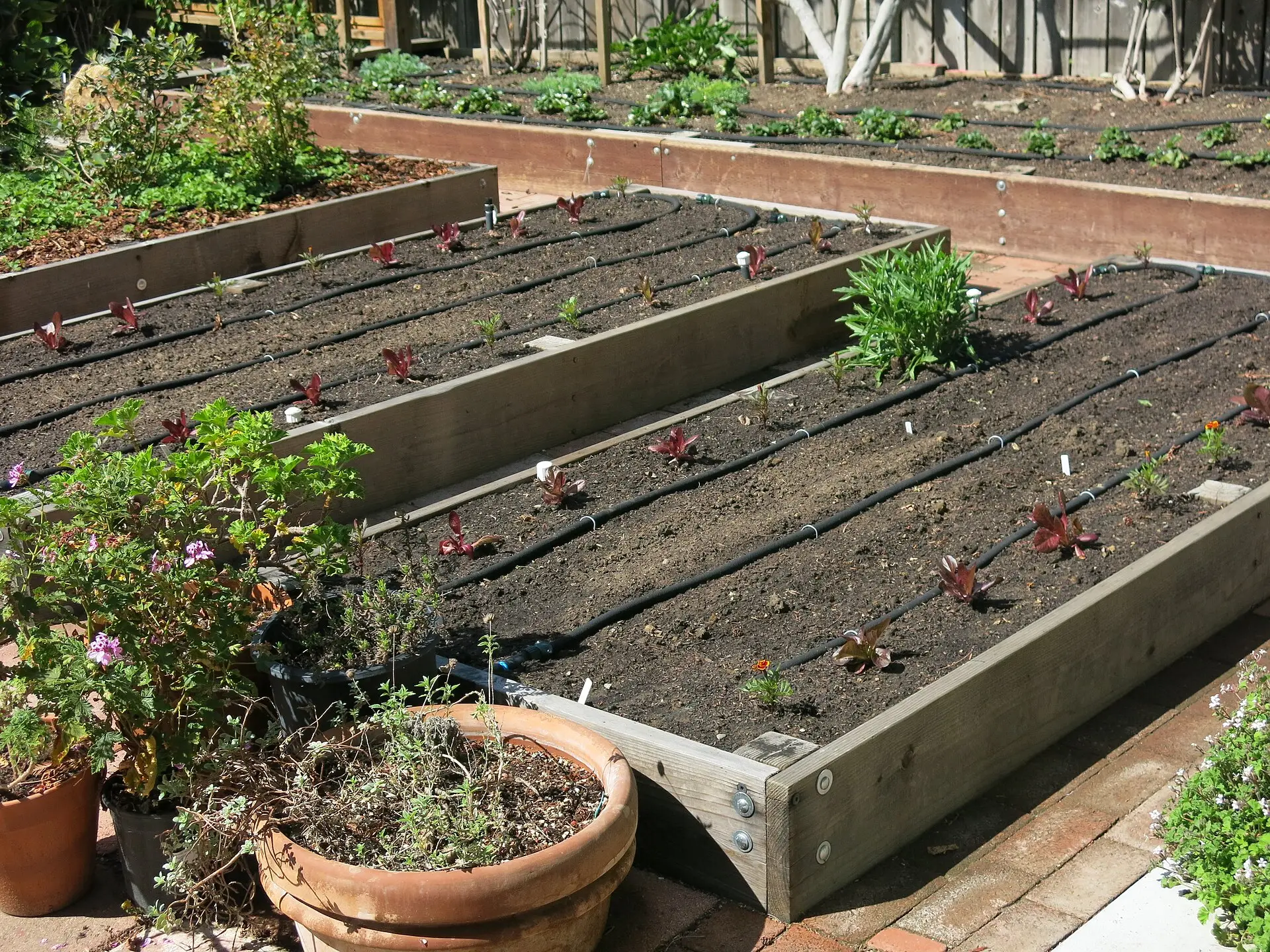
Raised bed soil sinks because organic matter decomposes and fine particles slip into the gaps between coarse ones, while a new fill has little structure. Illinois Extension calls settling a fact of raised bed gardening. Fill to about 2 inches below the rim, let it settle for two weeks, top up, then add 1/4 to a few inches of compost each year.

Key points
- Two processes cause most settling: decomposition of organic matter and finer particles filling the voids between larger ones (Jackson, Wright and Seiler, 2009).
- In a 70-week container trial, bark-based substrates with plants shrank about 16 to 17%; fallow pine substrate shrank 22 to 24%.
- The more organic matter in the fill, the sooner it needs topping up (Texas A&M AgriLife); a mineral soil fraction slows the loss.
- Illinois Extension advises an annual top-dressing of a few inches of compost or rich topsoil, cover crops in the off-season, and no tilling once the bed is established.
- Top-up volume is simply bed area x measured drop: 2 in on a 4x8 ft bed is 5.3 cu ft (151 L).
Why raised bed soil sinks
Raised bed soil loses height for two physical reasons: the organic part of the fill decomposes, and the particles pack together as water moves through them. Container-substrate research describes both. In a 70-week nursery study at Virginia Tech, Jackson, Wright and Seiler (HortScience, 2009) attribute shrinkage to particle breakdown by microbial decomposition and to settling, in which “finer particles fit between larger particles” under gravity and the movement of irrigation water.
University of Illinois Extension adds a third cause that applies specifically to garden beds. A freshly filled bed has little soil structure, and frequent disturbance by the gardener makes it settle further. In the words of horticulture educator Chris Enroth: “Settling soil is simply a fact of raised bed gardening.”
These mechanisms explain why some beds sink much faster than others:
- Organic content. Texas A&M AgriLife states that “the higher the organic material content the sooner you will need to add more soil/compost”. Mineral particles (sand, silt, clay) do not decompose; compost, peat, bark and wood do.
- Particle size mix. A fill of mixed coarse and fine particles settles as fines move into the gaps.
- Disturbance. Illinois notes that tilling an established bed destroys developing structure and speeds settling.
- Buried wood. In hugelkultur beds the core itself rots away; the original German method expects a 3 ft (90 cm) mound to settle over several months before planting (Washington State University).
How much: what the measured data show
No extension service or study we found publishes a typical settling rate for garden raised beds in inches per year. The best measured data come from nursery container substrates, which are entirely organic and therefore represent an upper range for a compost-heavy or soilless fill rather than a soil-based one.
| Substrate (container trials) | Duration | Volume or height loss | Source |
|---|---|---|---|
| Aged pine bark, with plants | 70 weeks | 16.3 to 16.7% | Jackson et al. 2009 |
| Pine tree substrate, with plants | 70 weeks | About 17% | Jackson et al. 2009 |
| Pine tree substrate, fallow | 70 weeks | 22.3 to 24.4% | Jackson et al. 2009 |
| Wood fibre substrate | 15 months | 36% | Fischer et al. 1993, cited by Jackson et al. |
| Wood fibre substrate | 51 weeks | 50% | Meinken and Fischer 1997, cited by Jackson et al. |
Two findings carry over to raised beds. First, roots help: the fallow containers shrank more than planted ones, which the authors attribute to roots filling the voids left by decomposition. Second, as the substrate shrank, air space fell and water-holding capacity rose, so a settled fill is denser and wetter, not just lower.
To translate the container figures into a bed: a 12 in (30 cm) fill that lost 16% of its height would drop by 12 x 0.16 = 1.9 in (4.9 cm). Treat that as an illustration for an all-organic fill. A blend dominated by mineral topsoil, as most extension services recommend in raised bed soil mix, loses less, because only its organic fraction decomposes.
Settling in the first weeks: fill high, wait, top up
The first and fastest drop happens as a loose new fill packs down under its own weight and the first waterings. The RHS advises filling to about 5 cm (2 in) below the rim, firming the soil, leaving it to settle for a couple of weeks and then topping it up before planting. A few practical steps follow from the sources:
- Mix the fill components thoroughly at the start; Illinois recommends tilling a new bed only if needed to blend them.
- Water the filled bed well, or wait for rain, so that particles settle before you plant.
- Measure again after two weeks and add mix to the planned level.
Order slightly more material than the bare geometric volume to cover this first top-up. The raised bed soil calculator includes a settling allowance for that reason.
Measuring the drop and calculating the top-up
The drop is easy to measure and the top-up easy to calculate, and both beat guessing. Measure from the top edge of the board down to the soil surface at several points along the bed, average the readings, and subtract the gap you want to keep (about 2 in or 5 cm, per the RHS). Then:
Top-up volume = bed length x bed width x drop.
| Bed size | Drop | Calculation | Top-up volume |
|---|---|---|---|
| 4x4 ft (1.2 x 1.2 m) | 1 in | 16 sq ft x 1/12 ft | 1.3 cu ft (38 L) |
| 4x8 ft (1.2 x 2.4 m) | 1 in | 32 sq ft x 1/12 ft | 2.7 cu ft (76 L) |
| 4x8 ft (1.2 x 2.4 m) | 2 in | 32 sq ft x 2/12 ft | 5.3 cu ft (151 L) |
| 4x8 ft (1.2 x 2.4 m) | 3 in | 32 sq ft x 3/12 ft | 8 cu ft (227 L) |
| 4x12 ft (1.2 x 3.7 m) | 2 in | 48 sq ft x 2/12 ft | 8 cu ft (227 L) |
Litres are cu ft x 28.32. Oregon State offers a quick check for bags: a 1 cu ft bag covers 12 sq ft at 1 in deep. So a 4x8 bed needs 32 / 12 = 2.7 bags per inch.
What to top up with, and how often
Use the same kind of material the bed was built with, weighted toward whatever has been lost. The sources give compatible rhythms:
| Source | Recommendation |
|---|---|
| Illinois Extension | Annual top-dressing with a few inches of compost or high-quality topsoil |
| Oregon State EM 9308 | 1/4 to 1 in of compost per year on existing vegetable beds |
| Oregon State FS 270 | Organic matter decomposes, so add more often; for example 2 in of leaves each winter |
| Square Foot Gardening Foundation | A trowel of compost per square after each harvest; add fresh mix when the level falls an inch or two |
| RHS | Top up after the initial settling period |
There is a tension worth noting. Filling the gap only with compost raises the organic share each year, which speeds the next round of settling and, at high rates, can release surplus phosphorus and potassium that leach away (Oregon State). If your bed drops by several inches a year, topping up partly with a good topsoil rebalances the mix.
Illinois adds two ways to slow the loss. Sow cover crops in the off-season so that roots occupy the soil year-round and build structure; they will not stop settling, but they slow it. And do not till an established bed. Spread the new material on the surface; mulches such as straw or arborist wood chips can go on top of the top-dressing to suppress weeds.
When settling signals a bigger problem
Steady, modest settling is normal. A sudden or uneven drop usually has another cause:
- Voids from buried wood or debris. Beds built on logs collapse as the wood rots; see hugelkultur in a raised bed.
- Soil washing out under the boards. Gaps at the base or between boards can let fine particles escape with drainage water.
- A fill that was mostly compost or soilless mix. The Square Foot Gardening Foundation itself notes that the level of Mel’s Mix “will naturally go down” over the seasons.
If the bed has lost a third or more of its depth, check the remaining depth against what your crops need in how deep a raised bed should be before deciding between a top-up and a full refill.
Method and limits
The causes of settling come from container-substrate research (Jackson, Wright and Seiler 2009, and the studies it cites) and Illinois Extension; the maintenance guidance comes from Illinois, Oregon State, Texas A&M, the RHS and the Square Foot Gardening Foundation. The shrinkage percentages were measured in nursery containers filled with bark or wood substrates, not in garden beds filled with soil and compost, so they indicate an upper range for organic fills only. We found no published, measured figure for typical annual settling in garden raised beds, and no field data on how fast bagged compost decomposes in a bed in its first year, so the page gives a measuring method instead of a single number.
Frequently asked questions
Why does my raised bed soil keep sinking?
Mainly because the organic part of the fill decomposes and the particles pack down. Container substrate research describes shrinkage from microbial breakdown plus finer particles settling between larger ones as water moves through. Illinois Extension adds that newly filled beds have little soil structure and that frequent digging speeds settling. Compost-rich and soilless fills sink fastest.
How much does raised bed soil settle?
There is no published figure for typical garden raised beds. The closest data come from container trials: bark-based substrates with plants lost about 16 to 17% of their height over 70 weeks, and older studies cited in that paper report 36% to 50% loss for wood-fibre substrates within about a year. Mineral topsoil-based fills settle far less.
How often should I top up a raised bed?
Once a year is the usual rhythm. Illinois Extension recommends an annual top-dressing of a few inches of compost or rich topsoil; Oregon State suggests 1/4 to 1 inch of compost a year for existing vegetable beds; the Square Foot Gardening Foundation adds a trowel of compost per square after each harvest and a fresh layer when the level falls an inch or two.
Should I till the old soil before adding new soil?
Only lightly, if at all. Illinois Extension recommends tilling new raised beds only if needed to mix the fill components, and avoiding tilling once a bed is established, because it destroys developing soil structure and speeds up settling. Spread the new compost or topsoil on the surface and let roots and soil life work it in.
Sources
- University of Illinois Extension (C. Enroth) (2021). Refreshing raised bed soil generates exceptional results
- HortScience 44(3):791-799, Jackson, Wright and Seiler, Virginia Tech (2009). Changes in Chemical and Physical Properties of Pine Tree Substrate and Pine Bark During Long-term Nursery Crop Production
- Royal Horticultural Society (2025). How to make a raised bed
- Oregon State University Extension Service (2021). How to Use Compost in Gardens and Landscapes (EM 9308)
- Oregon State University Extension Service (B. Edmunds) (2020). Raised Bed Gardening (FS 270)
- Texas A&M AgriLife Extension (P. Files, M. Arnold, D. Welsh, F. Dainello) (2009). Raised Bed Gardening (E-560)
- Square Foot Gardening Foundation (2019). Do you have to replace Mel's Mix?
- Washington State University Extension (L. Chalker-Scott) (2022). Hügelkultur: what is it, and should it be used in home gardens? (FS283E)